How to Organize a Small Kitchen for Better Cooking Together
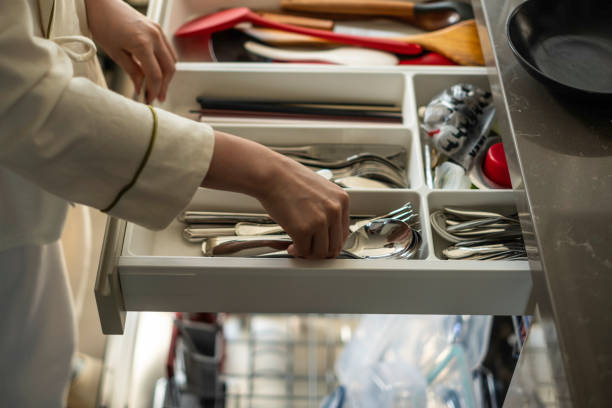
Once you have a refined set of gear, assign it a home based on the rhythm of your cooking. This is where logic overrules decoration. The tools you use together most frequently deserve the prime real estate. This means the knives, cutting boards, mixing bowls, and your most-used pans should live in the most accessible cabinets or hang on the wall within the “kitchen triangle” between the sink, stove, and refrigerator. If you reach for the whisk and measuring spoons every time you cook, they should not be buried in a deep drawer. Use simple drawer dividers to keep these items separated and instantly visible. This prevents the dreaded jumble of tools and means either of you can find what you need without asking, maintaining a seamless flow in your shared task.
For items used less often, like a roasting pan or a specialty bundt tin, utilize the higher, lower, or harder-to-reach spaces. The key is to store them logically—group baking items together, store food storage containers with their lids, and keep all pot lids in one place. Consider vertical space your best ally. Install a sturdy magnetic strip for knives and metal utensils to free up counter and drawer space. A pegboard on a blank wall can hold everything from measuring cups to strainers, turning tools into accessible art. Use the inside of cabinet doors for spice racks or hooks for lightweight items. The objective is to get everything off the countertops except for the one or two appliances you use daily, like a coffee maker. A clear counter is a calm counter, and it provides the physical workspace you need to chop, knead, and assemble side-by-side.
Finally, embrace systems that support your partnership. Designate a specific spot for the tools you use as a team, like the salad spinner or the immersion blender. When everything has a clear home, cleaning up becomes a shared, swift task rather than a puzzling chore. You are not just putting things away; you are resetting your stage for the next culinary collaboration. This intentional organization does more than maximize square footage. It minimizes the small, daily irritations that can distract from connection. By finding the perfect, purposeful gear and giving it a thoughtful home, you build a kitchen that supports partnership. The space becomes efficient, intuitive, and peaceful—a true backdrop where the real focus can be on the joy of creating something delicious together, one well-placed tool at a time.