Essential Tools for Cooking as a Couple

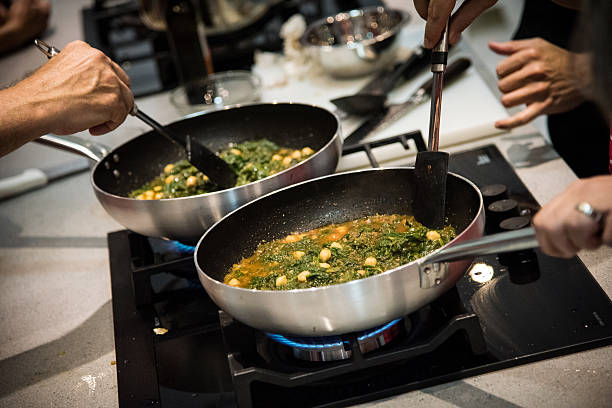
Foremost among these tools is a kitchen with ample counter space. Nothing tests patience faster than fighting for a few square inches to chop an onion while your partner juggles mixing bowls and recipe books. Sufficient prep area allows both individuals to have their own designated zone, enabling parallel tasks without territorial disputes. This physical space translates into mental space, reducing friction and allowing the process to flow. Complementing this is a quality set of knives, including at least two chef’s knives. Sharing a single knife is an exercise in frustration and poor time management. With two reliable blades, one person can julienne carrots while the other dices celery, embodying the very essence of teamwork. Similarly, having multiple cutting boards, preferably in different colors or sizes for proteins and vegetables, promotes both hygiene and simultaneous prep work.
Communication is silently facilitated by tools that encourage shared responsibility. A large, heavy-duty mixing bowl, for instance, becomes a focal point. One person can steady the bowl while the other whisks a vinaigrette or folds in egg whites, a simple act that requires nonverbal coordination and trust. Likewise, a kitchen scale with a tare function is an unsung hero for couples. It removes the subjectivity of measurement, preventing debates over whether a “cup” of flour should be packed or loose, and allows both parties to follow a recipe with scientific precision, a common language that bypasses culinary guesswork.
The tools that truly define the couple’s cooking experience, however, are often those that manage the inevitable mess and mismatch in pacing. A sink-side colander or a dedicated “scrap bowl” for trimmings keeps the workspace tidy and minds clear, as clutter is a notorious source of stress. Furthermore, investing in a high-quality oven thermometer can settle the common disagreement over whether the oven is truly “preheated” or if a dish is perfectly cooked, replacing arguments with empirical data. Perhaps most importantly, a reliable timer, or better yet, two, is indispensable. It allows the person sautéing the scallops to focus on the pan while the timer watches the roasting asparagus, ensuring that disparate elements of the meal come together in synchrony rather than chaos.
Ultimately, the most essential tool might be one that is not found in a drawer: a shared philosophy of patience and a sense of humor. Yet, even this abstract tool is supported by physical ones. A well-chosen apron for each person marks the transition into the cooking role and protects clothing, reducing anxiety over spills. A comfortable bar stool or two at the kitchen island allows one partner to sit, chat, and perhaps pour a glass of wine while handling lighter tasks like shelling peas, acknowledging that collaboration does not always mean equal and simultaneous frantic activity. In the end, equipping a kitchen for couplehood is about curating tools that enable a graceful duet. It is about creating an environment where the focus can shift from navigating logistical hurdles to the simple pleasure of creating something delicious together, one coordinated chop, stir, and taste at a time.