Why Measuring Right is a Love Language (Even If You Mess Up)
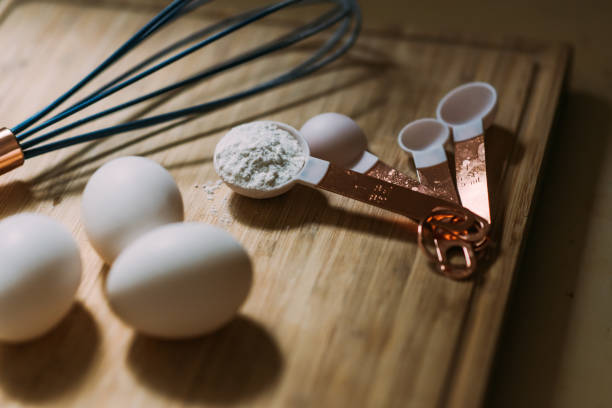
Let’s start with the basics that couples tend to argue about without even realizing it. You have two kinds of measuring tools: dry measuring cups and liquid measuring cups. They look different, and they work different. A dry measuring cup is the one that lets you scoop, level off the top with a knife, and call it a day. A liquid measuring cup is the clear one with a spout and lines on the side, so you can bend down and check if the milk hits the one-cup mark exactly at eye level. Why does this matter? Because if you use a dry cup to measure oil, you might spill, and then one of you gets annoyed about the mess. If you use a liquid cup to measure flour, you’ll pack the flour down and end up with way too much, and the cookies turn out like rocks. So here is the couple-friendly rule: whoever grabs the measuring cups first picks the right ones, and the other person holds the bag or the bowl. You are a team. One measures, the other stabilizes. That’s already a tiny win.
Now let’s talk about teaspoons and tablespoons. A tablespoon is three teaspoons. That’s the most important fact you will ever memorize as a couple. Why? Because if the recipe calls for two teaspoons of vanilla and your partner thinks, “Oh, that’s basically a tablespoon,” then you end up with vanilla-flavored pancakes that taste like a candle. And then you have to decide: do you scrap the whole batch or just eat it and laugh? You eat it and laugh, obviously, because you’re cooking together to get closer, not to become pastry chefs. So here is a trick to keep the peace: write down “3 tsp = 1 tbsp” on a sticky note and put it on the fridge. Then when one of you forgets, the other can point at it without being bossy. It’s a cheat code for kindness.
Another thing that trips couples up is when a recipe says “a pinch” or “a dash.” Those are not made-up words. A pinch is literally what you can grab between your thumb and forefinger. A dash is about one-eighth of a teaspoon. But do you need to get that precise? Only if the recipe is for something delicate, like a sauce that might turn bitter. For most meals, a pinch is just a little shake, and a dash is a bigger shake. The trick is to decide together: if the recipe is forgiving, like a stew or a soup, you can relax. If it’s a cake, you might want to actually measure. Talk it out before you pour. That conversation is the whole point. You’re learning to coordinate, to compromise, to say “I think that’s enough” without sounding like a nag.
One of the sneakiest traps for couples is the conversion from cups to ounces to grams. American recipes use cups. Many other recipes use grams. If you find a recipe online and it says 200 grams of butter, and you have only cup measures, you might panic. But a simple rule: one cup of butter equals two sticks, which is 226 grams. So 200 grams is just a little less than a cup. Close enough for a romance-building dinner? Absolutely. The thing that really matters is that you don’t fight over the math. If your partner says “let’s just use the whole cup,” and you say “no, it has to be exact,” you’ve already lost the point of cooking together. Pick your battles. A few extra grams of butter never ruined a relationship. What ruins it is being right about the measurement but wrong about the mood.
Let’s also talk about timing and temperature. A recipe will say things like “preheat oven to 350 degrees.” That means you turn the oven on first, before you start mixing. Couples often forget this, and then the batter sits there while the oven heats up, and someone gets nervous. The solution is simple: one person reads the recipe out loud while the other does the steps. The reader says “first, preheat oven.” The doer turns the knob. Then you continue. Reading aloud is a way of staying connected. You’re not just following instructions; you’re talking to each other. That’s the secret sauce of the whole website. You’re not just making food. You’re making a shared language.
And when you mess up—and you will mess up—don’t blame the recipe, don’t blame each other. Blame the fact that you are humans learning something new. Every mistake is a story you will tell later. “Remember that time we put a cup of salt instead of a teaspoon?” Yes, that will be a funny memory someday. But only if you handle it with grace right now. So if your partner dumps a whole tablespoon of baking soda into the pancake batter, just say “okay, now we try again tomorrow,” and order pizza. That is the real lesson of how to read any recipe: read it together, measure together, laugh together, and don’t let a mistake become a fight.
In the end, the perfect measurement isn’t as important as the perfect moment. When you’re side by side, one of you holding the measuring cup and the other pouring, you are literally cooperating. That’s the whole point. So learn the difference between a cup and a glass, learn that a tablespoon is three teaspoons, learn that a pinch is a tiny bit, and learn that getting it wrong is part of getting good at being a couple. The recipe is just the excuse. The real meal is the two of you.