The Single Stir-Fry Mistake That Sabotages Your Supper
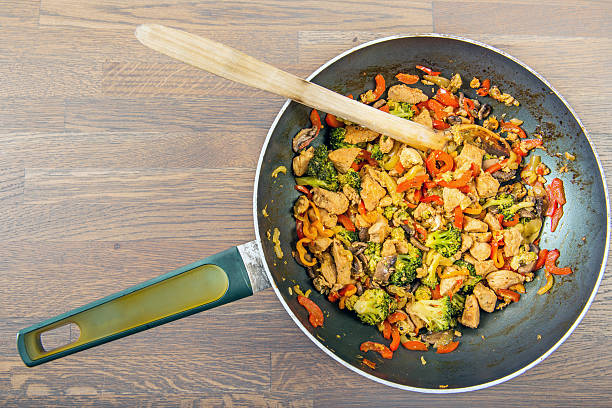
The science behind a proper stir-fry is rooted in intense, direct heat. A wok should be screaming hot before any oil is added, and that oil should shimmer and almost smoke before the first ingredient hits the surface. This initial blast of heat triggers the Maillard reaction—the complex chemical process that creates deep, savory, browned flavors on proteins and vegetables. When a couple, eager to use all their prepared ingredients, dumps the entire bowl of chopped chicken, broccoli, carrots, and peppers into the wok at once, the temperature plummets catastrophically. The wok’s thermal capacity is overwhelmed, and the released moisture from the food has no room to evaporate. Instead of searing, the ingredients begin to steam in their own collective juices. The result is pale, boiled-tasting meat and limp, waterlogged vegetables that lack the signature “wok hei,” or breath of the wok—that coveted smoky essence.
This mistake is particularly common for couples because the preparation often feels like a shared, efficient assembly line. With two people contributing, the mountain of prepped ingredients seems larger and more inviting to cook all at once in the spirit of speed and togetherness. Furthermore, the instinct to cook everything simultaneously so that both partners can sit down to eat a fresh, hot meal together is understandable. However, this good intention directly contradicts the mechanics of stir-fry success. The technique’s speed doesn’t come from cooking everything at once, but from cooking in swift, sequential batches over consistently high heat.
The consequences of overcrowding extend beyond texture. It also sabotages sauce integration and overall flavor cohesion. A proper stir-fry sauce, typically a mixture of soy, rice wine, aromatics, and thickeners like cornstarch, is designed to cling to ingredients that have been properly seared. When added to a crowded, watery wok, the sauce becomes diluted, fails to thicken properly, and simply pools at the bottom, leaving the food bland and the sauce separated. The final dish becomes a homogenous, steamed medley rather than a vibrant composition where each element retains its distinct character while being unified by a glossy, flavorful coating.
Overcoming this mistake requires a shift in mindset from a single-step cooking process to a strategic, staged one. Couples can leverage their teamwork advantageously here. While one partner manages the high-heat wok, searing small batches of protein and then vegetables, the other can be ready with the next batch, the sauce ingredients, and the serving plates. This not only ensures technical success but also enhances the collaborative experience—it becomes a coordinated performance where timing is key. The small, seared batches are then returned to the wok for a final, quick toss with the sauce, which immediately thickens and glazes everything in the intense, recovered heat.
In the end, the secret to a transcendent stir-fry is not a mysterious ingredient, but the disciplined use of space and fire. By resisting the urge to overcrowd, couples transform their joint effort from a recipe for steam into a guarantee of sizzle. The reward is a dish with complex, caramelized flavors, contrasting textures, and a sauce that truly clings—a far more satisfying culmination of partnership, both in its making and its eating.