A sharp knife can feel scary at first. That is normal. When you and your partner learn to use it together, you turn fear into teamwork. You do not need fancy skills. You need a few safe habits and a little patience. The reward is a calmer kitchen and a closer bond.
Set up your space before you cut. Put a damp towel under your cutting board. That keeps the board from sliding. Use a sharp knife. A dull knife slips more. Keep your counter clean and dry. Tie back long hair. Wash and dry your hands. Wet hands and knife handles do not mix.
Hold the knife with control. Place your thumb and index finger near the base of the blade. Wrap your other fingers around the handle. This is called a pinch grip. You do not squeeze hard. You just guide the knife.
Your other hand needs a safe home. Curl your fingertips under like a claw. Tuck your thumb behind your fingers. Your knuckles face the knife. The blade rests against your knuckles. The knife moves up and down. Your knuckles guide it. Your fingertips stay safe. This is the claw. It is simple. It is one of the best ways to avoid cuts.
Now learn the rocking cut. Keep the tip of the knife on the board. Lift the handle. Push the blade forward and down. Let the knife slice. Do not chop straight down like an axe. Use a gentle rock. Let the blade do the work. You do not need to force it.
Start with easy foods. Mushrooms, cucumbers, zucchini, and bell peppers are good first picks. Cut a flat side first so the food does not roll. A rolling food is a slipping food. If it rolls, stop. Make a flat side. Then keep going. Go slow. Even slices take practice. Speed comes later.
Cooking together makes this better. One person can cut while the other cooks or reads the recipe. Talk out loud. Watch each other’s hands. Give space. Do not grab your partner’s hand without asking. If you want to help, say, “Can I show you?“ Then move slowly. Show, do not take over.
Take turns. The person who feels nervous should cut first with simple food. The other person can stand nearby. Not too close. Cheer small wins. “Nice even slices.“ “You kept your fingers safe.“ This builds trust. It also makes the kitchen feel like a team space. You are not competing. You are cooking.
Safety rules matter. Never leave a knife in the sink. Someone could reach in and get cut. Wash knives one at a time. Hold the spine, not the edge. Dry them right away. If you drop a knife, do not try to catch it. Step back. Let it fall. Then pick it up by the handle. Carry a knife with the blade down and pointed back. Never point it at your partner.
If someone gets a small cut, stay calm. Rinse it. Press with a clean cloth. Raise the hand. Add a bandage. If it is deep, get help. Do not panic. Panic makes the kitchen feel unsafe.
Knife skills are not just about dinner. They are about paying attention. You learn to move together. You learn to trust. You learn to say, “I need a minute.“ You learn to listen. That is what cooking as a couple can do. It is not about perfect dice. It is about being on the same team.
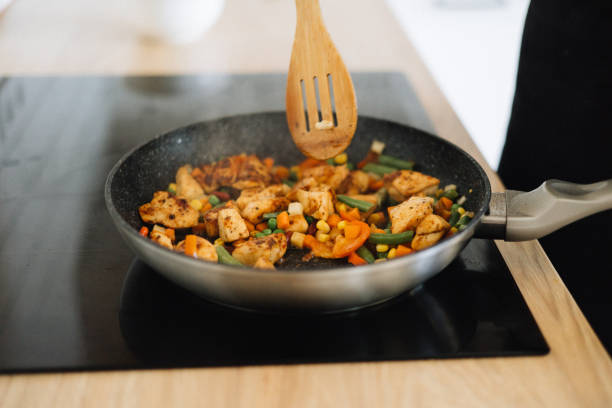
Try a simple stir-fry. One person slices peppers and onions. The other warms the pan. Then switch. You both get practice. You both get to rest. You sit down and eat what you made. It tastes better because you did it side by side.
Pick one skill each week. This week, practice the claw. Next week, practice the rocking cut. Then try an onion. Cut it in half first. Lay the flat side down. Then slice. Go slow. Keep your knife sharp.
You do not have to be a chef to cook together. You just have to be safe, kind, and willing to learn. The knife is a tool. It is not a test. When you learn side by side, you build something bigger than a meal. You build a stronger bond. So grab a cutting board. Put a damp towel under it. Take a breath. Then cut together.