How to Split Up Stir Fry Tasks So You Both Feel Like a Team
Start by deciding who is the chef and who is the prep person. This does not mean one person is the boss. It just means that one person handles the hot pan while the other handles everything that goes into it. The chef stands at the stove. That person controls the heat, the oil, the timing, and the stirring. The prep person stands at the cutting board or the counter. That person washes, peels, chops, measures, and hands things over. This split works great because the chef never has to stop stirring to chop an onion. The prep person never has to worry about splattering oil. You are both busy, both important, and you never bump elbows.
Now let us talk about the actual steps. The prep person should take care of all the vegetables first. Pick two or three veggies that cook fast. Bell peppers, snap peas, broccoli florets, thinly sliced carrots, or zucchini work great. Wash them, cut them into bite-size pieces, and pile them on a plate. Do the same with any protein like chicken, beef, tofu, or shrimp. Cut it into thin strips so it cooks quick. Then measure out the sauce. A simple stir fry sauce can be just soy sauce, a little honey or brown sugar, some minced garlic, and a splash of rice vinegar. Mix it in a small bowl and set it by the stove. The chef should not have to search for ingredients once the cooking starts.
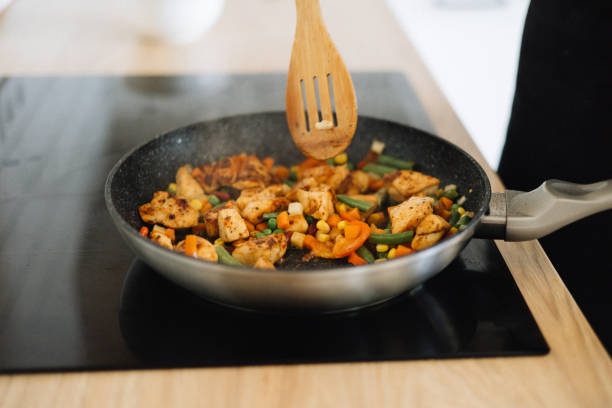
While the prep person does all that, the chef can get the pan ready. Heat a large skillet or wok on high. Add a couple tablespoons of oil with a high smoke point, like vegetable, canola, or avocado oil. Do not use olive oil here, it will burn. The chef should watch the oil until it shimmers. That means it is hot enough. Then the chef says, “Ready for the protein.“ The prep person hands over the plate of meat or tofu. The chef adds it to the pan and spreads it out. Let it cook without moving it for a minute or two so it gets brown. Then stir it around until it is just cooked through. Scoop it out onto a clean plate.
Next, the chef adds a little more oil if needed and says, “Veggies, please.“ The prep person hands over the plate of vegetables. The chef adds them all at once. Keep stirring every few seconds. The veggies should stay bright and slightly crisp, not mushy. After about two or three minutes, the chef says, “Sauce time.“ The prep person hands over the little bowl of sauce. The chef pours it in, adds the cooked protein back to the pan, and stirs everything together for another minute until the sauce thickens and coats everything.
Turn off the heat. The chef can take a deep breath. The prep person gets the bowls or plates out and maybe spoons some rice or noodles into each one. Then the chef scoops the stir fry on top. You sit down together and eat something you made as a team. No one got bossed around. No one felt left out. You both had a real part.
Here is another tip that helps a lot. Talk about the plan before you start. Stand together for thirty seconds and say who does what. Maybe you trade roles next time. One night you are the chef, next night you are the prep person. That way you both learn the whole process. You also get to see what the other person deals with. If the chef feels stressed, the prep person can chop faster. If the prep person feels bored, the chef can give them a job like crushing garlic or washing the pan while things cook.
Stir fry is forgiving. If you burn a little garlic, it is okay. If you add too much soy sauce, just call it extra salty and laugh about it. The point is not perfection. The point is that you cooked together, you shared a task, and you fed each other. That builds connection way more than a fancy recipe ever could. So next weeknight when you are tired and hungry, do not order takeout. Chop some veggies, heat a pan, and work as a team. You will have dinner on the table faster than delivery, and you will feel a little closer for it.