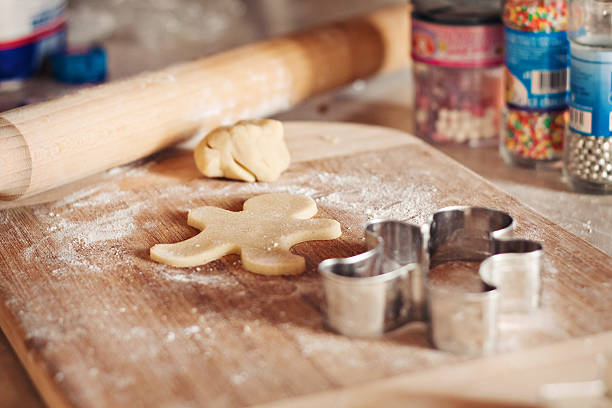
What If Our Creation Doesn’t Taste Good? The Essential Role of Failure in Innovation

The fear of a “bad taste” is fundamentally a fear of judgment, both external and internal. We imagine the raised eyebrows of our peers, the silent pity of our mentors, or the harsh critic in our own mind that whispers, “I knew you weren’t good enough.“ This fear can be paralyzing, preventing ideas from ever leaving the safety of our imagination. We conflate the failure of the thing with a failure of the self. Yet, history’s most transformative creations are rarely first drafts. They are the products of a messy, iterative process where “not tasting good” is not a stop sign, but the most crucial piece of feedback available. The inedible batch is what teaches the baker about oven temperature; the clumsy prototype reveals the fundamental design flaw; the awkward chapter shows the writer where the story truly wants to go.
Embracing this reality reframes the creative process from a performance into a conversation. A creation that doesn’t taste good is not a monologue cut short; it is the start of a dialogue with the material, the market, and the problem we are trying to solve. Thomas Edison famously reframed his thousands of unsuccessful light bulb filaments not as failures, but as discoveries of ways that did not work. Each “bad taste” narrows the path, eliminating variables and forcing a deeper inquiry. It asks us to deconstruct: Is it too sweet or too salty? Is the texture wrong or the core concept unappealing? This analytical phase, born from disappointment, cultivates resilience and a more intimate understanding of our craft. We move from being creators who simply execute to becoming problem-solvers who adapt.
Furthermore, creations that initially fail often contain the seed of something revolutionary. The story of penicillin begins with a contaminated, “failed” petri dish. Post-it Notes emerged from a glue that was famously not sticky enough. A “bad taste” can sometimes mean it is merely unfamiliar, challenging a palate accustomed to the conventional. The bitter complexity of a craft beer or the challenging dissonance in a modern symphony may repulse at first encounter, only to create entirely new appetites and genres. The question then evolves from “Is this good?“ to “For whom is this intended, and what need does it meet?“ Sometimes, the failure is not in the creation, but in our expectation of universal, immediate acclaim.
Ultimately, the courage to create is inseparable from the courage to face a result that may be unpalatable. A culture—whether in a company, a classroom, or a community—that punishes “bad tastes” will inevitably starve, producing only safe, repetitive, and bland imitations of what already exists. In contrast, an environment that treats unsuccessful attempts as vital data fosters a spirit of fearless exploration. It understands that the path to a masterpiece is paved with the evidence of sincere attempts, each one a lesson digested.
So, what if our creation doesn’t taste good? We taste it anyway. We wince, we note the specifics of the bitterness, and we ask “why?“ with genuine curiosity. That moment of unpleasantness is not the end of the journey, but its very essence. It is the point where naive enthusiasm transforms into skilled mastery, where a simple idea begins its complex evolution into something of true and enduring value. The sweetest successes are almost always preceded by the sour, the salty, and the utterly inedible—each one a necessary ingredient in the final, triumphant recipe.