The Claw Grip and the Anchor: Two Simple Ways to Keep Your Fingers Safe
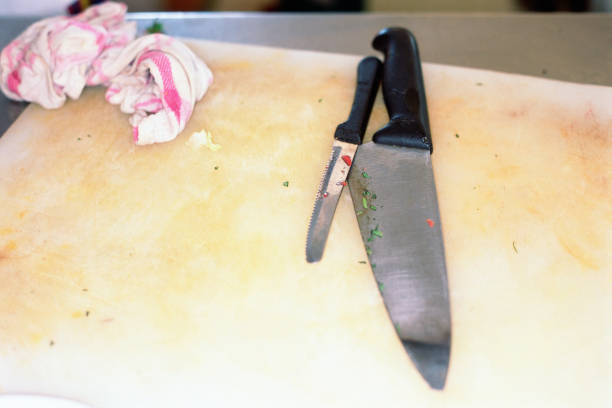
Let us start with the claw grip. This is how you hold the food you are cutting. Instead of laying your fingers flat on top of a vegetable or fruit, you curl them in like a claw. Your fingertips tuck under, and your knuckles point forward toward the knife. When you hold the food this way, your knuckles act like a guide for the blade. The knife slides right against your knuckles, not your soft fingertips. You can chop faster because you do not have to keep looking at your fingers. You just let your knuckles do the steering. Practice this with a soft vegetable like a cucumber or a zucchini. Have your partner watch you and say if your fingers are curled in. Then switch. This is a great chance to cheer each other on and laugh if somebody makes a funny claw shape. Remember, nobody is born knowing this. It takes a few tries.
Now for the anchor. This is how you keep the food from sliding around on the cutting board. When you cut round things like onions, apples, or potatoes, they like to roll away. To stop that, you slice off a tiny piece from one side of the food. That flat side goes down on the board. Now the food sits steady. It will not wobble. Next, when you are cutting, you keep the tip of your knife on the cutting board and lift only the handle part. The tip stays down like a pivot point. This is called the anchor. It gives you more control and keeps the blade from accidentally slipping into your hand. Practice this with your partner. One of you holds the knife, the other checks that the tip stays down. Take turns being the coach. If you both get frustrated, it is okay to put the knife down and take a deep breath. That is part of cooking together too.
When you both learn these skills side by side, something bigger happens. You start to trust each other. You learn to communicate without a lot of words. Maybe you say, “Hey, your claw looks good,” or “I need you to hold the onion steady while I cut.” That teamwork builds emotional intimacy. It is not just about the food. It is about being patient when your partner is slow, and asking for help when you are stuck. You also get to share a little victory when you both finish chopping a whole pile of vegetables without any accidents. That feeling is better than any recipe.
Another tip for couples: pick a chopping task that matches your skill level. If one of you has never held a chef’s knife before, start with something easy like mushrooms or celery. Let the more experienced partner handle the hard stuff like butternut squash. You can swap roles over time. The goal is not to be perfect. The goal is to learn together and have a good time. If a piece of onion flies off the board, laugh about it. If you cut uneven chunks, that just means your dish will have “rustic charm.” Nobody is grading you.
Here is a little practice routine you can do as a couple. Get two cutting boards and two identical vegetables. Maybe two bell peppers or two carrots. Stand next to each other or across from each other. Set a timer for two minutes. Both of you practice the claw grip and the anchor as you slice. When the timer goes off, compare your piles. It is not a competition. It is just a way to see how you both are doing. Talk about what felt awkward and what felt natural. Then maybe switch vegetables. After a few rounds, you will notice your confidence going up.
One more thing: always use a sharp knife. A dull knife is actually more dangerous because you have to push harder, and that makes it easier to slip. If your knives at home are old and dull, making a plan together to get them sharpened can be a fun little project. You can look up a local sharpening service or buy a simple hand sharpener. That decision is something you do as a team. It shows that you care about each other’s safety.
Cooking together is not about being the best chef in the world. It is about being the best teammate. When you learn knife skills side by side, you are not just preparing dinner. You are preparing a stronger relationship. Every safe slice and every shared laugh is a small win. Keep practicing the claw and the anchor, and soon you will both be chopping with confidence, side by side.