The Art of the Grip: Mastering the Proper Way to Hold a Chef’s Knife
Many beginners instinctively wrap all four fingers around the handle, with the thumb resting on one side, mirroring how one might hold a hammer. This “handle grip,“ while feeling secure, creates a significant disconnect between the user and the blade. It sacrifices precise control for brute force, often leading to a choppy, unstable motion that is as unsafe as it is inefficient. The blade becomes a separate entity, wobbling with each stroke and increasing the risk of accidental slips. The proper method, often called the “pinch grip” or “blade grip,“ elegantly solves these problems by establishing the hand as the command center for the entire knife, not just its handle.
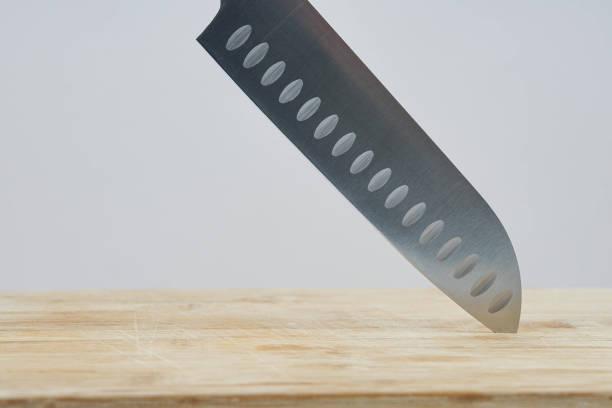
To achieve this, one begins by laying the knife on the cutting board. The heel of the blade—where the metal meets the handle—is the focal point. Using the thumb and the side of the bent index finger, gently pinch the blade itself at this junction. The thumb should rest on one side of the blade, roughly opposite the first knuckle of the index finger, which curls around to meet it on the opposite side. This pincer motion securely anchors the hand to the most stable part of the knife. The remaining three fingers then naturally curl around the handle, providing supportive stability. This grip may feel unfamiliar at first, but it creates a remarkable pivot point, offering direct, nuanced control over the blade’s angle and pressure.
The benefits of this technique are immediate and multifaceted. First and foremost is enhanced safety. By pinching the blade, the hand guides the knife with authority, preventing the twisting or rocking that leads to accidents. The knife becomes a true extension of the arm, moving with intention rather than momentum. Secondly, it dramatically improves precision. The pinch point acts as a fulcrum, allowing for delicate, rocking motions for herbs or firm, controlled pushes through dense vegetables. This control allows for consistent, even cuts, which are the hallmark of good technique and ensure even cooking. Finally, it reduces fatigue. By utilizing leverage and placing the strength in the pinch rather than a white-knuckled squeeze on the handle, the forearm and wrist remain more relaxed, enabling longer prep sessions without strain.
Mastering the grip, however, is only half the equation. The supporting hand, often neglected, plays an equally critical role. The fingers should be curled inward like a claw, with knuckles guiding the side of the blade. This position keeps fingertips safely tucked away while providing a consistent guide for the knife’s movement. Together, the pinching hand and the claw hand work in concert, one guiding and the other cutting, establishing a rhythm that is both safe and efficient.
Ultimately, holding a chef’s knife correctly is not about rigid rules but about understanding principles of leverage, control, and safety. The pinch grip redefines the relationship between cook and tool, fostering a sense of confidence and connection. It is the silent first step in every recipe, the unspoken grammar of kitchen language. By investing the time to unlearn instinct and cultivate this proper technique, one does not simply learn to hold a knife; one learns to command it, turning the daily act of preparation into a safer, more precise, and truly satisfying culinary art.