Knife Skills Made Safe and Simple for Cooking Couples
Safety is the non-negotiable starting point. A sharp knife is a safe knife. This seems backwards, but a dull blade requires more force, slips more easily, and is far more dangerous than a properly honed edge. Invest in a simple honing steel and learn to use it before each cooking session. Run the blade along the steel at a consistent angle a few times. This realigns the edge, keeping it effective. A stable cutting board is equally critical. Place a damp towel or a non-slip mat underneath to prevent it from dancing across the counter. Your cutting surface is your command center; it must be secure.
Your grip on the knife dictates control. Forget clutching the handle like a hammer. Instead, pinch the blade itself between your thumb and the knuckle of your index finger, just in front of the handle, then wrap your remaining fingers around the handle. This “pinch grip” gives you unparalleled control and prevents the wrist from tiring. Your other hand, the guiding hand, is just as important. Form a “claw” by curling your fingertips inward, tucking your knuckles against the flat side of the blade. The knife blade then rides against these knuckles, acting as a guide. Your fingernails are protected, and the blade has a consistent measure for slicing. This technique keeps ingredients steady and your fingers whole.
The motion comes from your shoulder and elbow, not your wrist. Use a smooth, rocking motion, keeping the tip of the knife on the board as you pivot the heel up and down. Let the sharpness of the blade do the work; you are guiding, not forcing. For harder items like carrots or potatoes, a controlled push cut is more effective. Bring the knife down and forward in one fluid motion. The key is consistency in rhythm and pressure. When you both adopt this method, you develop a shared, almost musical rhythm in the kitchen—a quiet, focused harmony of movement.
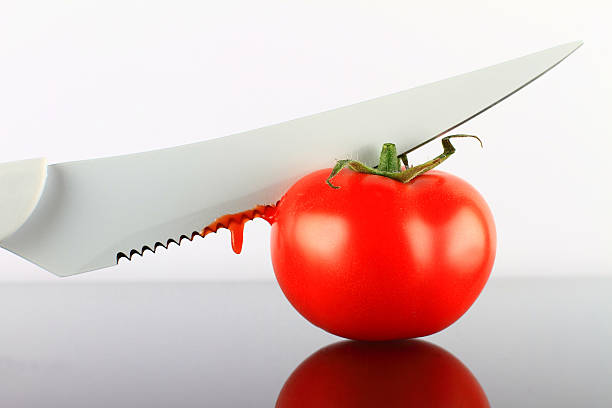
Start with foundational cuts. Mastering a basic dice builds the muscle memory for everything else. First, create flat surfaces by slicing a stabilizing piece off your onion or potato. With the flat side down, make parallel slices horizontally, then vertically, using your claw grip. Finally, slice across to create a perfect dice. For herbs, the “rock chop” is your friend. Place one hand on the tip of the knife and rock the blade through the pile, using a gentle, repetitive motion. Slicing meats or soft vegetables like tomatoes requires a smooth drawing motion of the blade, like using a saw, to create clean slices without crushing.
For couples, this learning journey is a powerful bonding tool. Stand side-by-side at the counter, each with your own board and knife if space allows, or take turns at one station. Communicate clearly: “I’ll dice the onions if you chiffonade the basil.“ Watch each other’s form, offer gentle corrections, and celebrate small improvements. The shared focus required—the mutual respect for the tool and the task—fosters patience and teamwork. You are not just preparing ingredients; you are building a shared language of competence.
Ultimately, these skills strip away the anxiety of cooking. When you are no longer intimidated by your knife, you are free to engage with the creative and collaborative joy of making a meal together. The kitchen becomes a place of flowing conversation and shared accomplishment, starting with the simple, profound confidence of a safe, clean cut.