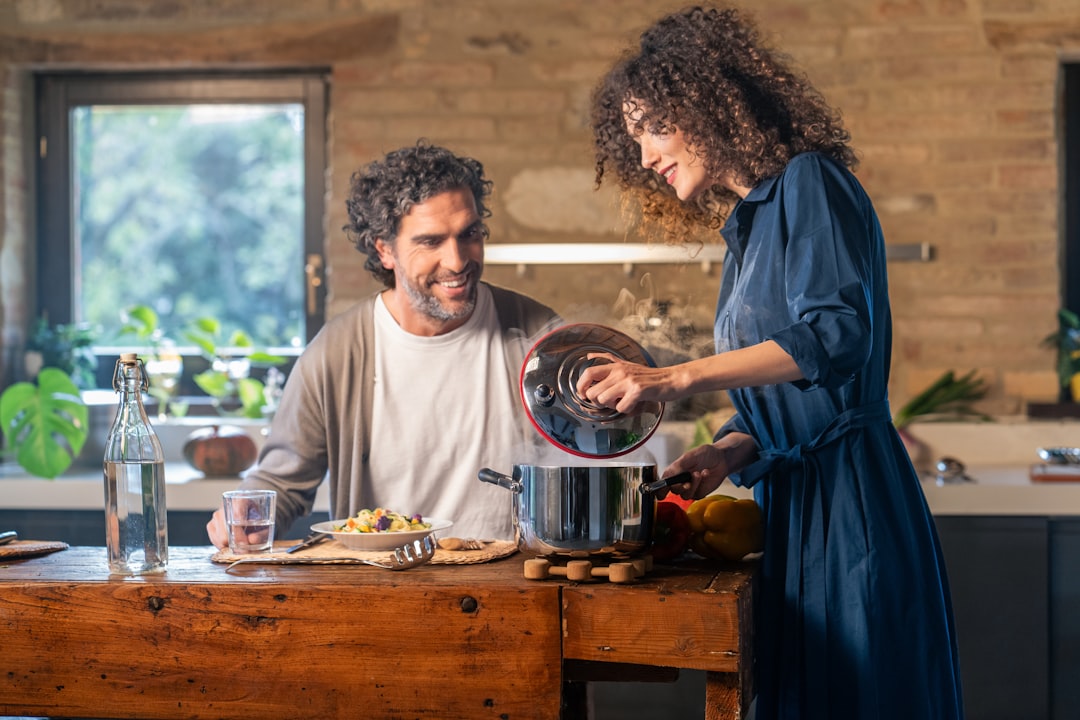
You just tasted the sauce. It is not bad, but it is not great. It tastes like something is missing. One of you wants to add salt. The other wants to add something else. This is a chance to learn together. Seasoning is not a magic trick. It is a skill you can build side by side. Build it together, and you also build trust, patience, and closeness in the kitchen.
Start with a clean spoon. Taste the food. Then have your partner taste it. Do not talk yet. Just notice. Is it dull? Does it make you want more? Does it taste too sharp? Does it feel heavy? When you both taste the same thing, you get two sets of clues. One person may notice salt first. The other may notice something sour or sweet. That is teamwork.
The first helper is salt. Salt does not just make food salty. It wakes up flavor. If a soup tastes flat, a small pinch of salt can make it taste more like itself. Add a little. Stir. Taste again. Then let your partner taste. Do not dump in a lot. You can always add more. You cannot take it out. Small steps work better than big moves.
The second helper is acid. Acid sounds like a science word, but you already know it. Lemon juice, lime juice, vinegar, and even a little tomato can add zip. If a dish tastes heavy or sleepy, a squeeze of lemon can wake it up. Try a few drops. Stir. Taste. Let your partner try. Maybe they say, “That is better.“ Maybe they say, “Too much.“ Both answers are useful. You are learning what your shared taste buds like.
The third helper is fat. Fat can be butter, oil, cream, coconut milk, or even the oil in a dressing. Fat makes food feel rich and smooth. If a sauce tastes sharp or thin, a small amount of fat can round it out. Add a little. Stir. Taste. Then pass the spoon. Notice how fat changes the feel in your mouth. It is about flavor and texture.
The fourth helper is heat. Heat can mean spicy heat, like chili flakes or hot sauce. It can also mean warm spices, like cumin, paprika, or ginger. A little heat can make a dish feel alive. But heat can take over fast. Add a tiny bit. Stir. Taste. Let your partner decide if it needs more. The right answer is the one you both enjoy.
Sometimes a dish needs more than one helper. Maybe it needs salt and acid. Maybe it needs fat and a little heat. This is where you learn to work side by side. One person adds a pinch of salt. The other adds a squeeze of lemon. Then you both taste. You do not need to be a chef. You just need to be curious.
Another tip is to season in layers. That means adding a little salt at the start, a little in the middle, and a little at the end. You build flavor step by step. If you only salt at the end, it can taste flat. If you salt at every step, the food tastes deeper and more even. Small kind moments every day matter more than one big moment once a year.
When you cook with your partner, you will not always agree. One of you may like things saltier. One of you may like more spice. That is okay. You can season your own plate at the table. The pot can stay balanced for both of you. You can be close and still have your own taste.
The best part about learning seasoning together is that you get better by doing it. You taste. You adjust. You taste again. You learn to trust your tongue and your partner’s feedback. That is a skill. It is also a way to feel closer. Next time a dish tastes flat, do not stress. Grab two spoons. Taste it together. Add a little something. Taste again. You are not just making dinner. You are making a memory.